

Jan 7, 2025
Teaching Algebra from All Angles

“It is better to solve one problem five different ways than to solve five problems one way.” — George Pólya
One of the joys of math is that there is never just one way to solve a problem. The same problem may be solvable with a visual proof, or through symbolic manipulation, or even simply plugging in a few test numbers to spot the pattern. Each approach sheds a different light on the problem, and true understanding comes from seeing how they all connect.
That’s the insight behind our three different Algebra courses: we want to show the power of algebra from many different angles.
Algebra like a Detective: Solving Equations
In Solving Equations, you’re playing a game with one goal: find the unknown. Instead of starting with written equations, we use a simple physical metaphor: balance scales.
If three identical triangles balance a 6-pound weight, most students can figure out that a triangle must weigh 2 pounds. The entire course builds on this style of deductive reasoning. We use people's physical intuitions to make algebra concrete and tangible.
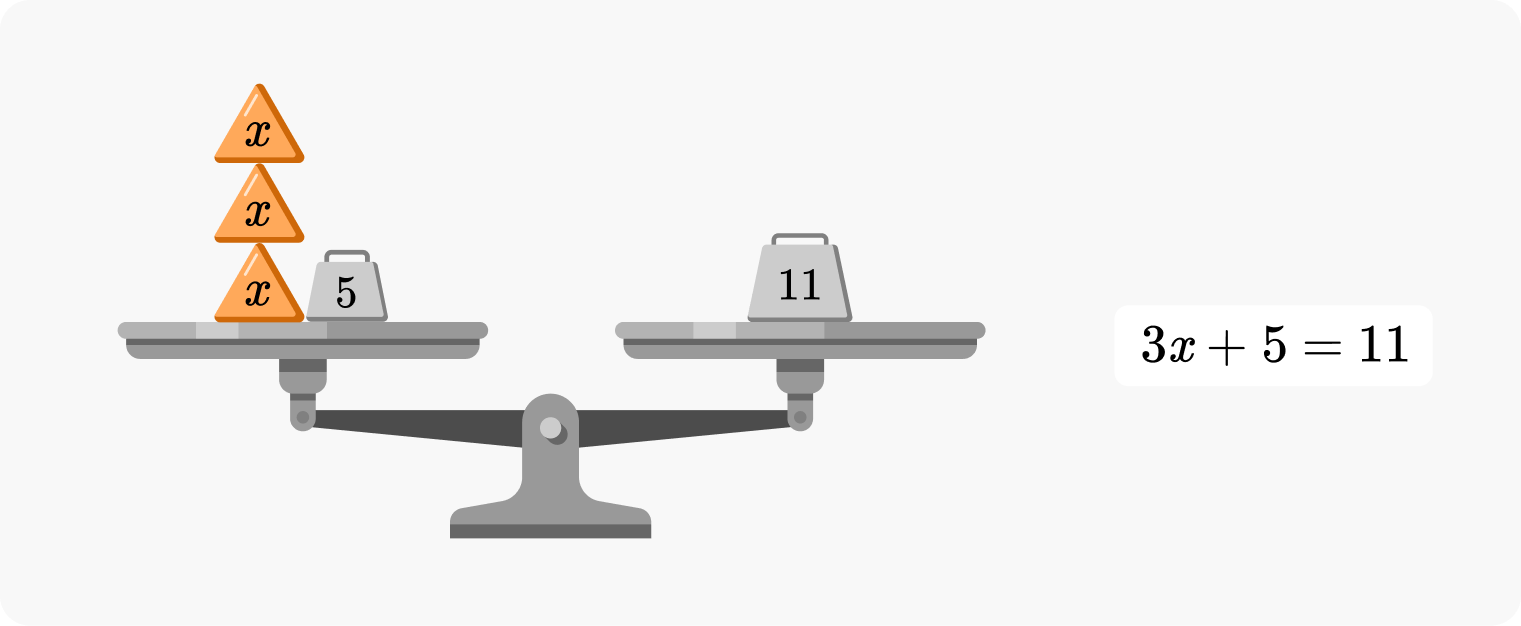
The beauty of scales as a metaphor that they extend naturally to other ideas in algebra. If the scale is unbalanced, you're working with inequalities instead of exact values. If you add another scale to the mix, you're solving systems of equations.
While the puzzles evolve in complexity, the core game is the same: use what you know to find what you don’t.
Algebra as Patterns: Visual Algebra
Visual Algebra looks at algebra from a different angle – instead of finding unknowns, we're looking for patterns. Here, the game is simple: find the rule.
Instead of using variables to represent an unknown value we're trying to figure out, we use them to represent the nth step in a sequence. This is a great way to teach functions, which appear in this course as rules that generate patterns.
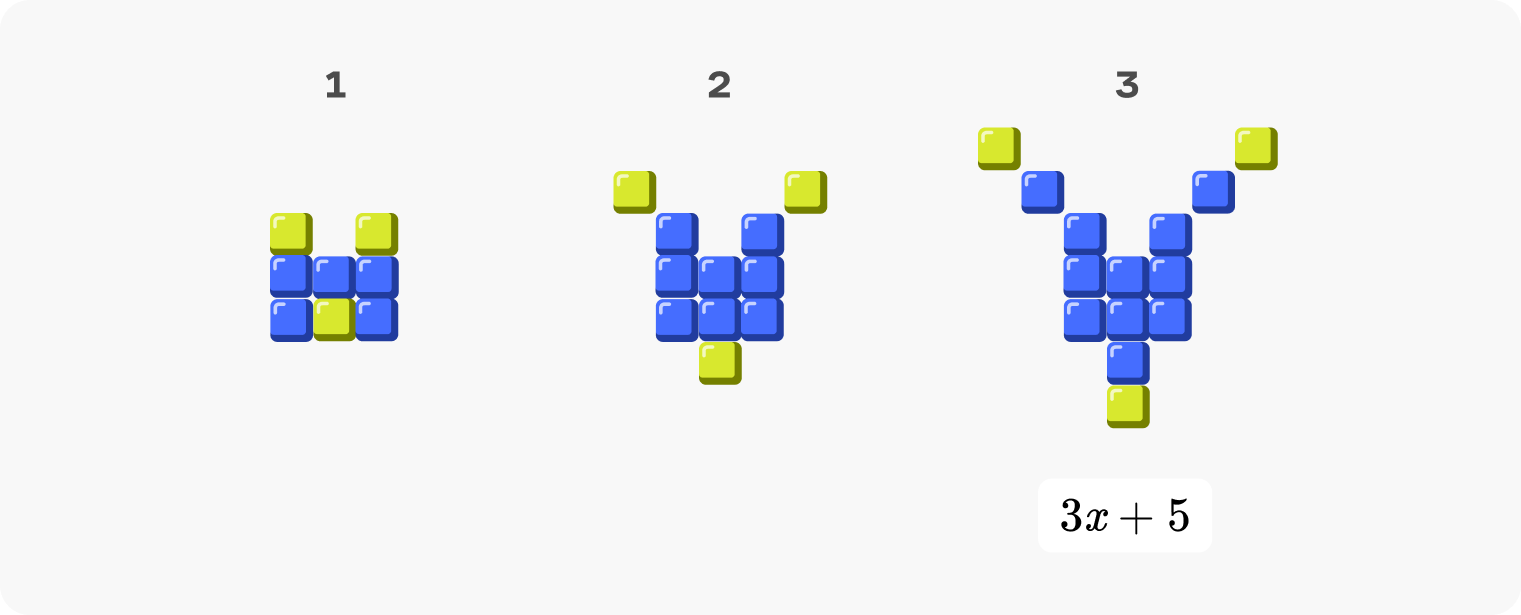
For example: the sequence above starts with 8 blocks, then grows to 11 blocks, and then 14 blocks. There are all sorts of questions we can ask about this sequence:
- What does the next step in the sequence look like?
- How many blocks are there in the 10th step?
- How many steps until there are more than 100 blocks?
- How can we write this pattern down?
This is a simple linear pattern from the beginning of the course. However, this approach lets us introduce some of the more interesting functions you'll encounter in algebra: quadratic functions, exponential functions, periodic functions, and even recursive patterns that feed on themselves.
Each new function type reveals another way patterns can behave, but the core challenge remains the same: find the rule, figure out what function is underneath.
Algebra as Tool: Real-World Algebra
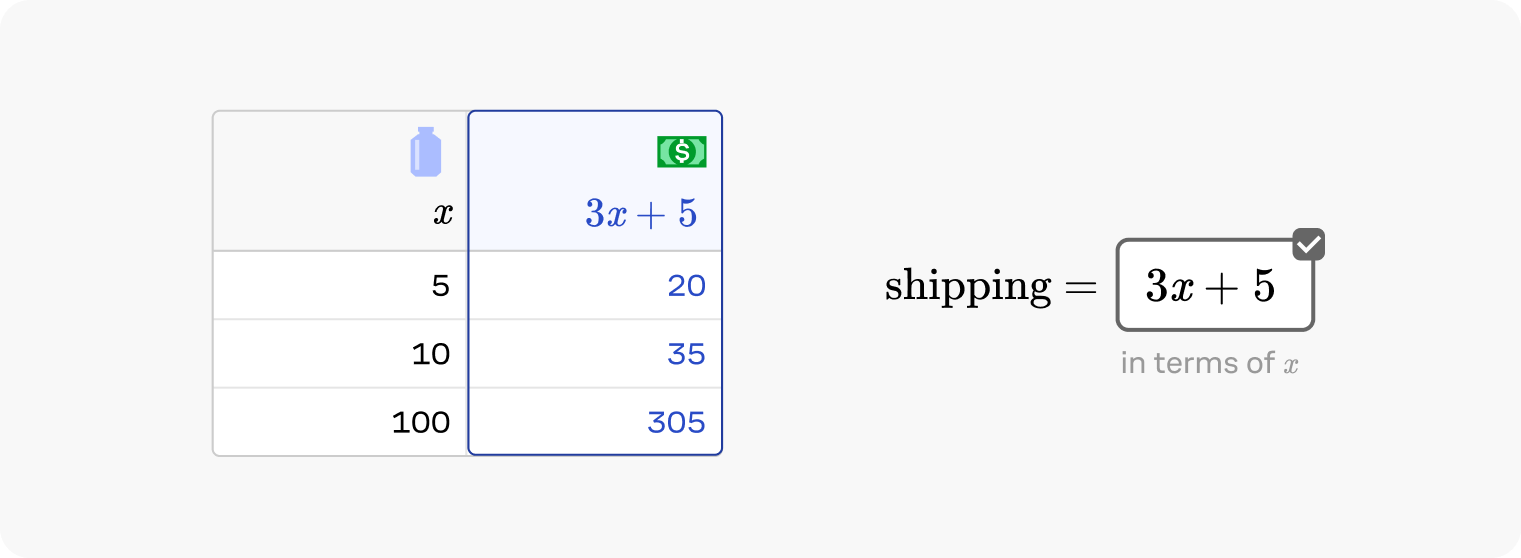
Real-World Algebra is focused on bringing Algebra into daily use. The single underlying game in Real-World Algebra is building a model. You're figuring out how to represent a real scenario with math, which you can then use to answer questions about the future.
You’ll write formulas in spreadsheets, predict future values, and make simple business decisions. This is algebra in its natural habitat, where it is used to guide everyday decision-making.
Diving deeper into Visual Algebra
Each of these perspectives is quite deep, and you could learn most of Algebra inside of any single one of these perspectives. Let's take a look at how far Visual Algebra goes.
We start off with linear growth. These are patterns that start with a constant term and grow the same amount each step:
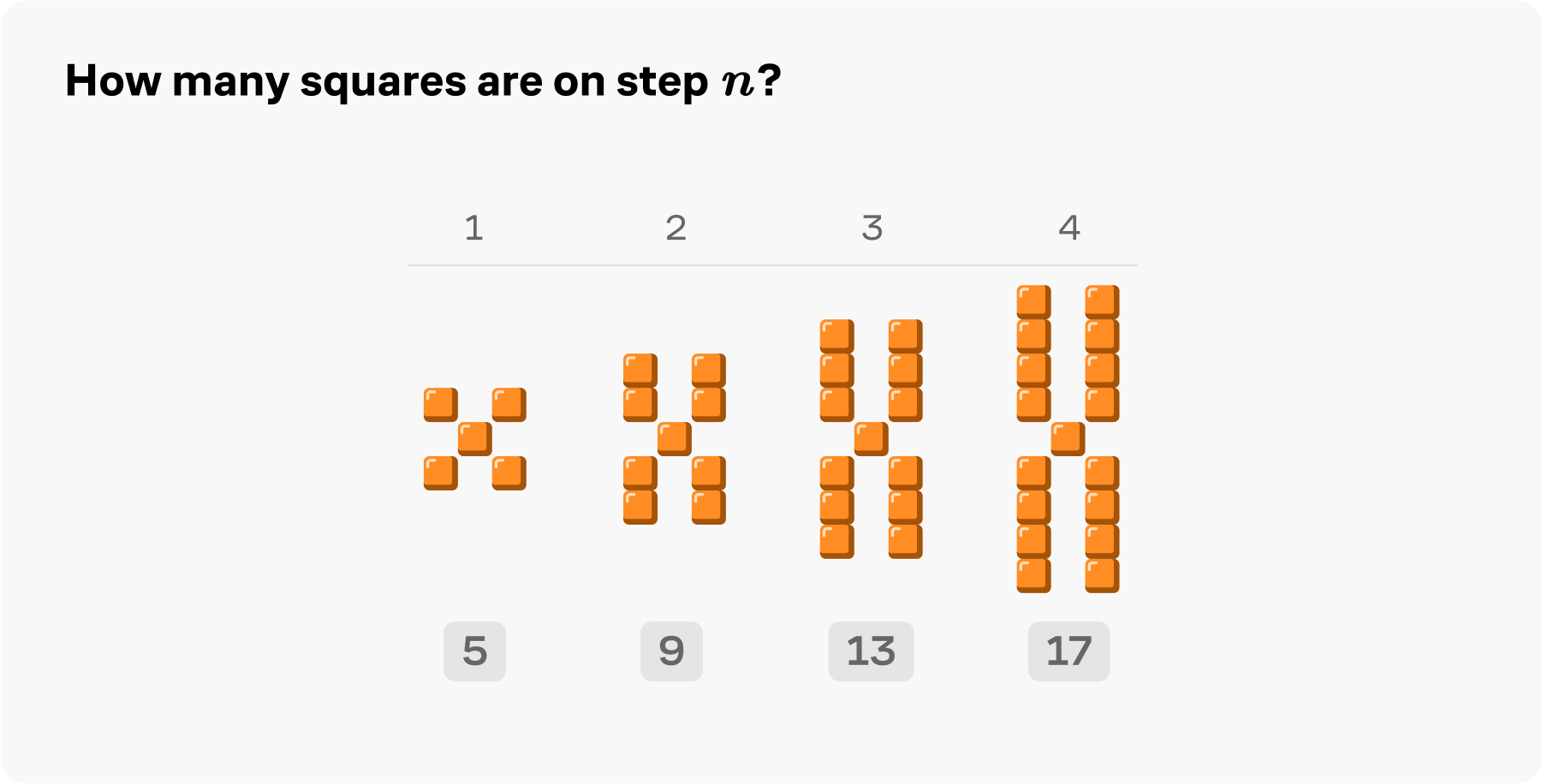
We then have you compare different rates of growth to build your familiarity with linear functions:
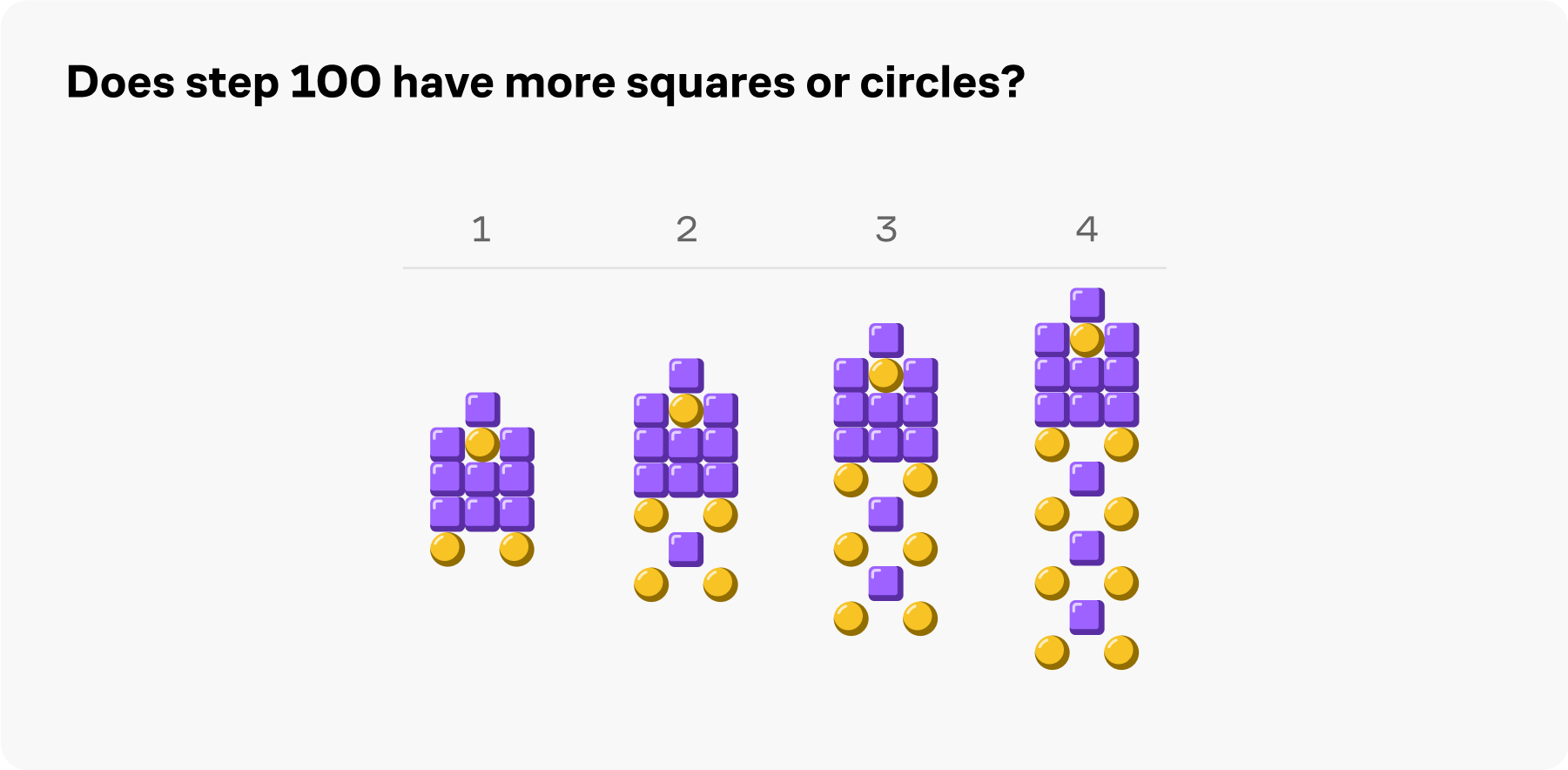
This approach makes quadratics feel surprisingly intuitive. They show up as really satisfying patterns that grow more quickly than the previous patterns:
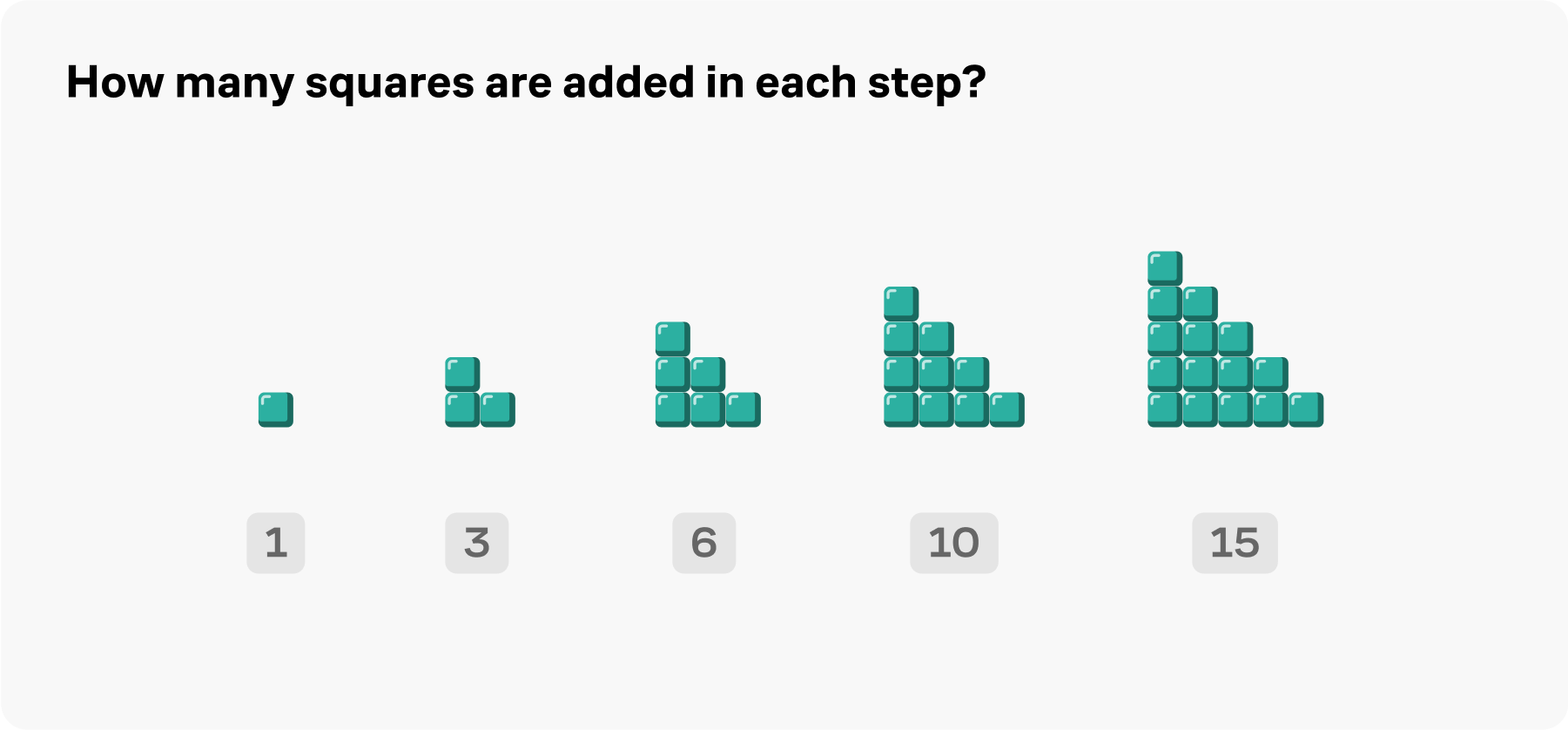
Once you’ve gotten the fundamentals down, we then start to tour the zoo of mathematical functions: periodic functions, exponentials, and beyond. The problems become quite diabolical, even for seasoned problem solvers.
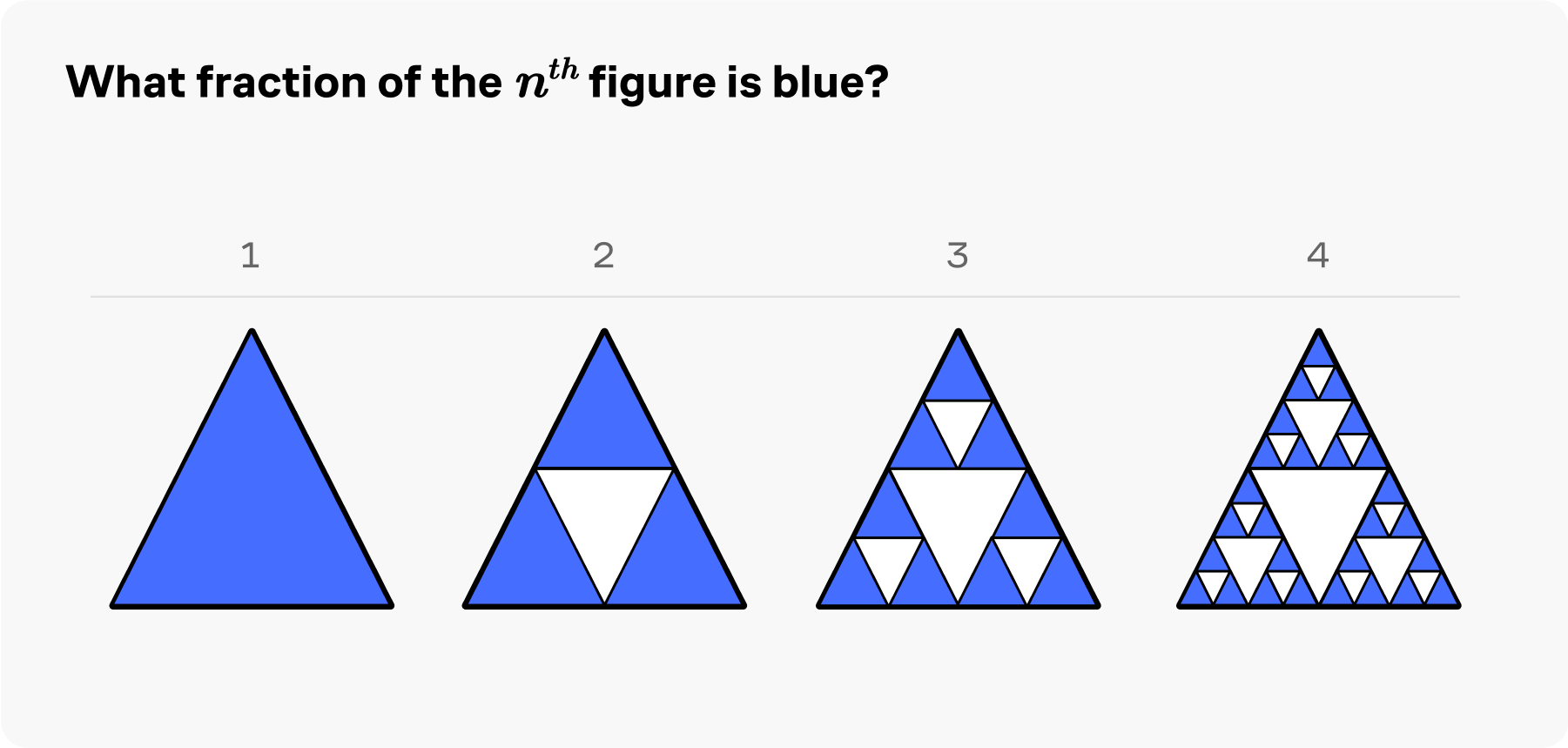
By interacting with visual patterns and deducing the rules that generate them, you’ll gain a deep, almost tactile understanding of how functions behave and what they really represent.
Pick your own pathway
Exploring algebra from these different angles is like looking at a gemstone. Each perspective reveals another facet of the same concept. As you turn the gem in your hand, you start to see how all those facets fit together into a single, shimmering whole.
That’s the experience our algebra courses aim to create – a multidimensional understanding of algebra that feels as natural as it is eye-opening. If you want to try it for yourself, you can get started here.
To keep up with our latest thoughts on the intersection of AI and STEM learning, follow us on LinkedIn and on X at @brilliantorg and @suekhim.